
Railways have always been considered the lifeline of India, connecting every corner of the country and enabling large-scale transportation of goods and passengers. For businesses, contractors, and suppliers, participating in Railway Tender filling opens doors to significant opportunities. The Indian Railways issues thousands of tenders every year for procurement, services, and projects, giving businesses of all sizes a chance to collaborate with one of the largest government sectors.
In this blog, we will explore the step-by-step process of Indian Railway e-tender process, its importance, benefits, and expert tips to help businesses succeed in the competitive tendering process.
Understanding Railway Tender Filling
Before diving into the process, let’s first understand what Railway Tender filling means. Tenders are official documents released by government authorities, in this case the Indian Railways, inviting bids from businesses or individuals to carry out specific work, supply materials, or deliver services.
Railway tender registration online is the process of preparing, submitting, and managing tender applications online or offline to participate in these bidding opportunities. From small vendors to large construction companies, anyone who meets the eligibility criteria can apply for these tenders.
Why Railway Tender Filling Matters
The Indian Railways is one of the world’s largest railway networks, employing millions and managing massive infrastructure. Every year, it floats tenders worth thousands of crores for various projects such as:
- Railway construction and maintenance
- Supply of raw materials and machinery
- Electrical works and signaling projects
- Civil engineering contracts
- IT services and consultancy
By mastering the process of Railway Tender filling, businesses can expand their client base, secure long-term projects, and build credibility as government-approved vendors.
Types of Railway Tenders
Understanding the types of tenders is crucial before starting with Railway Tender filling. Some common categories include:
- Open Tenders – Accessible to anyone who fulfills the eligibility criteria.
- Limited Tenders – Invitations sent to a selected group of vendors.
- Global Tenders – Open for international bidders.
- E-tenders – Online tenders through the Indian Railways e-procurement system.
When planning for Railway bidding process in India, businesses must identify the right type of tender to apply for based on their expertise, capacity, and resources.
Step-by-Step Guide to Railway Tender Filling
Now let’s go through the process of How to apply for railway tenders step by step:
1. Registration on the E-Procurement Portal
To begin with, vendors must register on the official Indian Railways e-procurement portal. Registration requires company details, contact information, and documentation such as PAN, GST, and bank details.
2. Digital Signature Certificate (DSC)
A DSC is mandatory for online tender submission. Without a valid DSC, Railway Tender filling cannot be completed. Businesses should obtain a Class III DSC for secure bidding.
3. Search for Relevant Tenders
After registration, vendors can search for suitable tenders by category, location, or department. Carefully reading tender notices ensures you apply only for relevant opportunities.
4. Document Preparation
The most critical step in Railway Tender filling is preparing documents. This usually includes:
- Company profile and registration certificates
- Financial statements and balance sheets
- Work experience certificates
- Technical proposals and project details
5. Tender Fee and EMD Submission
Tender documents often require a fee and an Earnest Money Deposit (EMD). These payments validate the seriousness of the bidder in the Railway project tendering process process.
6. Submitting the Bid
Once all documents are ready, businesses can upload them through the portal along with financial bids. Accuracy and attention to detail are vital here.
7. Monitoring Tender Status
After submission, bidders must keep track of tender status to know whether they are shortlisted, rejected, or awarded the contract.
Common Challenges in Railway Tender Filling
Though opportunities are abundant, Common mistakes in tender filling can be challenging. Some of the common issues faced include:
- Lack of proper documentation
- Errors in bid submission
- Technical issues during online uploading
- Misunderstanding eligibility requirements
- Competition from large players
To overcome these, businesses should carefully read tender guidelines and, if necessary, take consultancy services to ensure smooth tender submission.
Benefits of Railway Tender Filling
Participating in Railway vendor registration has multiple benefits:
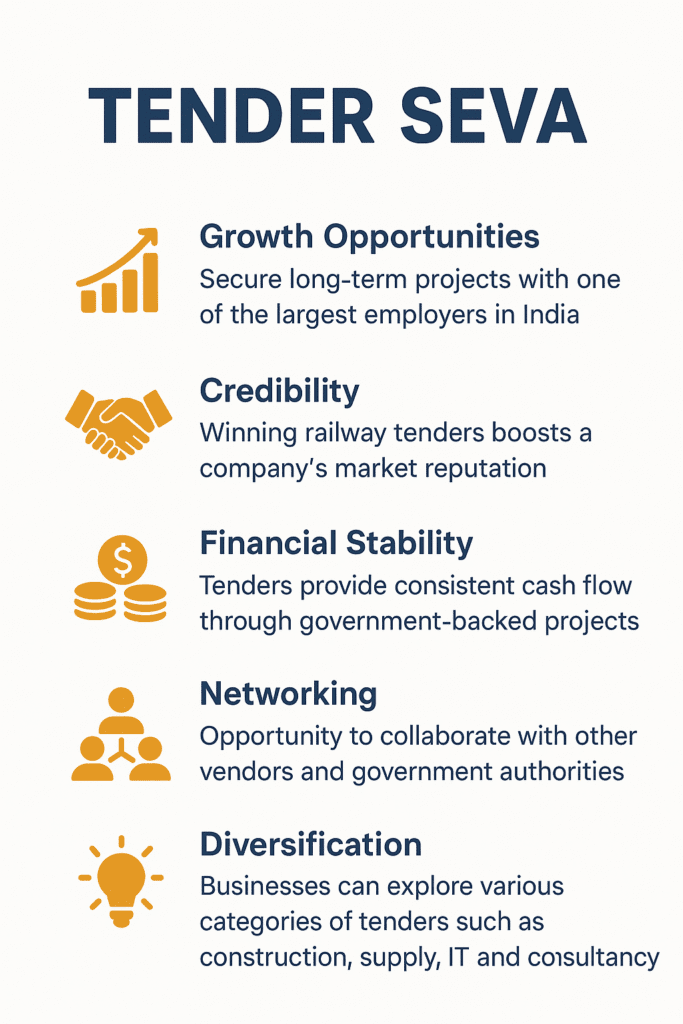
- Growth Opportunities – Secure long-term projects with one of the largest employers in India.
- Credibility – Winning railway tenders boosts a company’s market reputation.
- Financial Stability – Tenders provide consistent cash flow through government-backed projects.
- Networking – Opportunity to collaborate with other vendors and government authorities.
- Diversification – Businesses can explore various categories of tenders such as construction, supply, IT, and consultancy.
Expert Tips for Successful Railway Tender Filling
Here are some professional tips to enhance your success rate in Railway Tender filling:
- Start Small – Apply for smaller tenders initially to build experience and credibility.
- Stay Updated – Regularly check tender portals and subscribe to tender alerts.
- Accuracy Matters – Ensure no mistakes in document uploads or financial bids.
- Use Consultancy Services – If new to Railway Tender filling, professional consultants can guide you through documentation, registration, and bidding.
- Highlight Experience – Provide detailed past project records to showcase capability.
- Follow Deadlines – Submitting bids on time is essential. Late entries are automatically rejected.
Role of Professional Consultancy in Railway Tender Filling
For many businesses, especially small and medium enterprises, handling Railway contractor eligibility independently can be overwhelming. This is where professional consultancy services come in. Experts assist with:
- Registration on e-procurement portals
- Acquiring DSC
- Preparing tender documents
- Drafting technical and financial bids
- Submitting tenders without errors
Consultancies also provide continuous support by monitoring tenders, sending alerts, and guiding businesses in compliance requirements. FOLLOW US ON FACEBOOK AND INSTAGRAM….
